
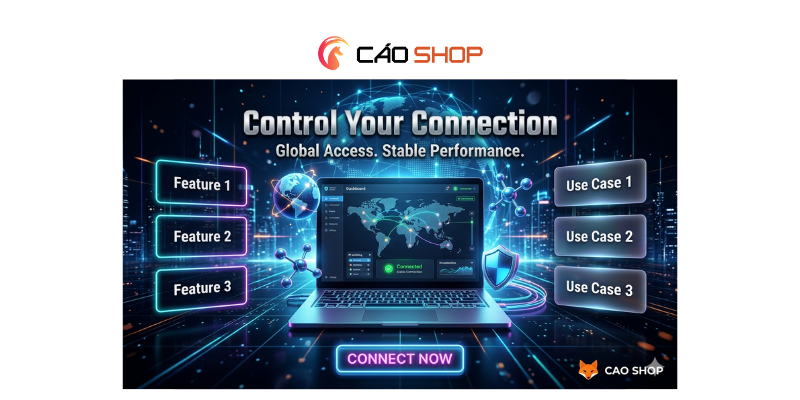
A global proxy system helps users manage connections, improve access flexibility, and maintain better control over online workflows.
The keyword proxy global is becoming more relevant as users look for better control over their internet connections.
Online work today requires flexibility, speed, and stability.
This is where a global proxy system becomes useful.
What a global proxy does
A global proxy acts as an intermediary between your device and the internet.
It helps manage how requests are sent and received.
This allows users to:
- control network access
- improve connection management
- optimize online workflows
Why flexibility matters
Different tasks require different connection setups.
Without flexibility, users may face:
- limited access
- unstable connections
- restricted workflows
A global proxy helps create a more adaptable system.
Supports multiple use cases
This type of tool can be used in many scenarios:
- remote work
- data management
- content access
- online operations
It adapts to different needs.
Better control over connections
Control is important when working online.
With a global proxy, users can:
- manage how connections are routed
- optimize performance
- maintain consistency
This improves overall efficiency.
Works well with other tools
A proxy system can be combined with:
- VPN tools for added privacy layers
- automation tools for workflow scaling
This creates a more complete setup.
The biggest mistake users make
The biggest mistake is using tools without understanding how they fit into a system.
Without a structured setup, results are inconsistent.
Users should focus on:
- clear goals
- proper configuration
- consistent usage
How Cao Shop should position this
Cao Shop should position this keyword as:
- a network control tool
- a workflow optimization solution
- a flexible internet access system
Final thoughts
Proxy global is not just about access.
It is about control, flexibility, and efficiency in online work.
For users who rely on digital systems, it becomes an important tool.