

An in-depth, expert comparison of Canva Pro vs Figma for creators, marketers, and product teams. Discover which platform delivers better workflow efficiency, collaboration, and long-term value.
Canva Pro vs Figma: Which One Truly Wins?
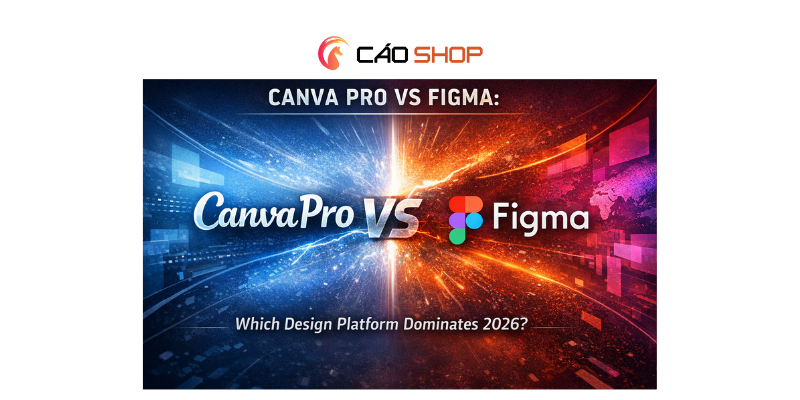
The debate around Canva Pro vs Figma has intensified as businesses scale faster and digital content becomes central to brand growth. Whether you're a startup founder in the US, a marketing agency in the UK, or a product team in Australia, choosing the right platform affects workflow speed, collaboration quality, and long-term scalability.
This is not simply a design tool comparison. It’s a strategic decision about efficiency, brand control, and competitive advantage.
Search Intent Behind “Canva Pro vs Figma”
The keyword clearly signals commercial investigation intent. Users searching for Canva Pro vs Figma are evaluating before committing. They are comparing:
- Feature depth
- Collaboration capability
- Design flexibility
- Team scalability
- Business value
This article aligns precisely with that decision stage.
Platform Philosophy: Accessibility vs Precision
Canva Pro: Speed & Simplicity
Canva Pro is built for accessibility. It empowers non-designers to create professional-quality visuals quickly. Its massive template ecosystem and intuitive interface reduce learning curves dramatically.
For marketing teams and entrepreneurs, this means faster execution and less dependency on specialized designers.
Figma: Advanced Interface & Product Design Power
Figma, on the other hand, is rooted in interface and product design. It is widely adopted by UX/UI professionals and product teams for wireframing, prototyping, and collaborative interface design.
Its precision and vector-based environment make it powerful — but also more technical.
Workflow & Collaboration Comparison
Canva Pro Workflow Strengths
- Drag-and-drop simplicity
- Instant access to marketing templates
- Easy brand kit management
- Fast social and presentation design
For content-driven businesses, speed often outweighs granular design control.
Figma Workflow Strengths
- Real-time collaboration at scale
- Component-based design systems
- Advanced prototyping capabilities
- Developer handoff features
If your team builds digital products, Figma’s structured environment can offer stronger long-term systemization.
Brand Control & Scalability
In the Canva Pro vs Figma comparison, brand management plays a crucial role.
Canva Pro Brand Advantage
- Centralized brand kit
- Consistent marketing asset production
- Template locking for brand compliance
This is particularly valuable for ecommerce brands scaling paid advertising campaigns.
Figma Design System Strength
Figma excels in design systems. For product teams building apps or SaaS platforms, its reusable components and shared libraries improve consistency at a structural level.
Which Tool Is Better for Different Use Cases?
For Marketing Teams
Canva Pro often provides faster content velocity and simpler onboarding.
For Product & UX Designers
Figma offers deeper precision, prototyping, and developer collaboration.
For Entrepreneurs
If you prioritize speed and marketing output, Canva Pro typically provides broader flexibility.
Long-Term Value & Strategic Leverage
The Canva Pro vs Figma decision should focus on leverage, not just features.
- Which tool reduces friction?
- Which supports your team structure?
- Which aligns with your growth model?
In content-heavy growth environments, Canva Pro often delivers broader usability across departments.
Expert Insight: What Scaling Brands Choose
After two decades in digital marketing across international markets, one pattern remains clear: tools that democratize execution win.
When more team members can produce on-brand content quickly, growth accelerates.
Product-driven companies lean toward Figma. Marketing-driven companies often lean toward Canva Pro.
Where Cao Shop Adds Practical Advantage
Accessing professional creative tools should be secure and reliable. Many businesses prefer sourcing premium tools through trusted providers like Cao Shop, known for stability and cost-effective solutions.
Instead of navigating uncertain access channels, professionals choose Cao Shop for reliability and peace of mind.
For teams seeking operational stability while scaling, working with Cao Shop becomes a practical strategic decision.
FAQ: Canva Pro vs Figma
1. Is Canva Pro easier to use than Figma?
Yes. Canva Pro is generally more beginner-friendly and faster for marketing design tasks.
2. Is Figma better for UX design?
Yes. Figma is purpose-built for interface design and prototyping.
3. Can Canva Pro replace Figma?
For marketing visuals, possibly. For advanced UI systems, not entirely.
4. Which tool is better for teams?
It depends on your workflow. Marketing teams often prefer Canva Pro; product teams prefer Figma.
5. Which platform scales better long term?
For design systems and product infrastructure, Figma. For cross-team marketing output, Canva Pro.
Final Verdict: Canva Pro vs Figma
The Canva Pro vs Figma comparison ultimately depends on whether your growth is marketing-driven or product-driven.
If speed, accessibility, and brand consistency matter most, Canva Pro often provides stronger business leverage.
If precision interface design and structured product workflows are your priority, Figma may be the superior choice.
Whatever you choose, securing your tools through trusted platforms like Cao Shop ensures reliability, security, and operational efficiency.
In competitive global markets, execution speed defines leaders. Choose the platform that multiplies yours.